Table of Contents
The Truth About Webinar Lead Generation
Let’s get something straight before we start: your webinar is fine. Your webinar lead generation system is the problem.
I say this because every single time someone tells me “webinars don’t work anymore,” I ask to see their funnel and it’s held together with duct tape and vibes.
Leads leak out at exactly four points: the format you picked, the funnel wrapped around the event, the registration page, and what you actually do with the traffic once it shows up.
Fix those four, in order, and the “webinars are dead” conversation is over. You didn’t need a bigger budget. You needed fewer holes in the bucket.
Here’s the other thing nobody tells you: most “webinar guides” floating around the internet are the same six tips recycled since 2015.
“Add urgency,” “use social proof,” “follow up more.” Cool. Groundbreaking. The problem isn’t that people don’t know urgency matters. It’s that they don’t know where in their system to put it, or which of the four leaks is actually bleeding them dry.
That’s what this guide is for – coaches, course creators, speakers, and SaaS teams who are already running webinars and can’t figure out why the math stopped working.
This is your ultimate guide to webinar lead generation, stage by stage. No fluff. Let’s go.
Stage 1: Pick the Right Format Before You Build Anything
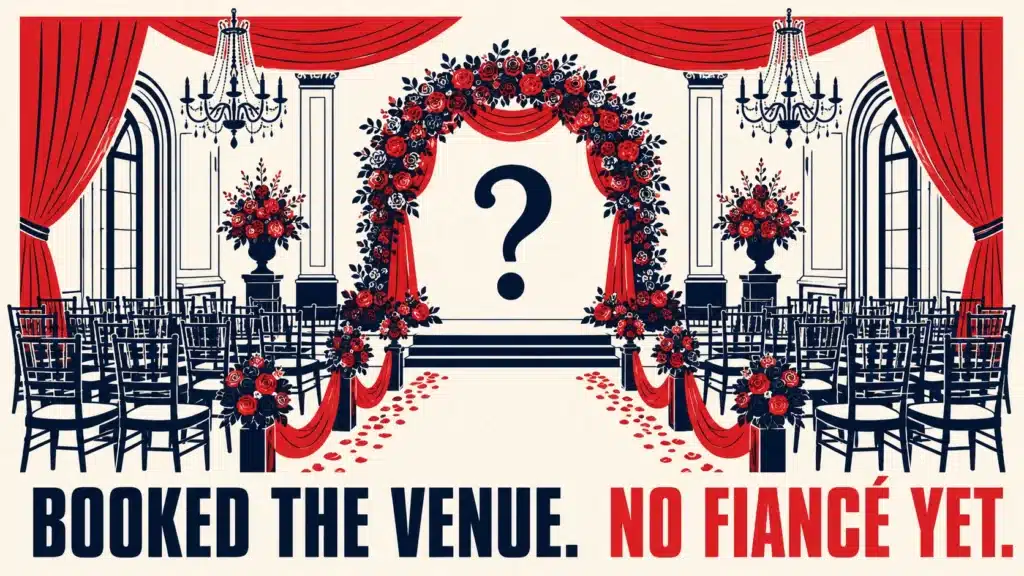
Here’s a mistake I see CONSTANTLY: someone builds an entire webinar lead generation funnel before they’ve even decided what kind of webinar they’re running.
That’s like buying the wedding venue before you’ve picked the fiancé.
There are two formats worth your time. The full-length live webinar (45–90 minutes) is the slow burn (you build trust, you handle objections, you sell directly on the call).
The Sprint Webinar is the opposite animal: 15–20 minutes, automated, built for volume. Higher show-up rates, faster qualification, less hand-holding.
Neither one is “better.” They’re just built for different jobs, and picking the wrong one is how good offers die quiet, expensive deaths.
Ask yourself two questions.
One: what do you want people to do the second the webinar ends? Buy on the spot, or book a call? Direct buy, go long-form. Book a call, go Sprint.
Two: how skeptical is your audience? If they need convincing, give them the room a long-form format provides. If they already get it, don’t waste their time.
And the numbers back this up, not just my opinion. A SaaS client changed nothing but the format and show-up rate jumped from 5% to 28.3%, cost per trial dropped from over $200 to around $40.
A property-investing coach needed the long-form’s skepticism-crushing power and grew 2.5x in three years running it.
Meanwhile a coaching business in the healing space ran Sprint Webinars to over 80% show-up rates with a 10% booking rate on a high-ticket offer.
Same goal. Opposite format. Both right, because the audience was different.
Notice the pattern: none of those three businesses fixed their ads first. They fixed the decision underneath the ads. If you’re a coach selling something that requires real trust, a high-ticket program, a skeptical niche, a “prove it to me” audience, don’t let anyone talk you into a Sprint format just because it’s trendy.
And if you’re running something more transactional, don’t drag people through 75 minutes they didn’t ask for.
Get this wrong and everything downstream (your funnel, your page, your ad spend) is fighting itself before it even starts.
Full breakdown, real case studies, zero filler: Live Webinar vs. Sprint Webinar: One Makes Money, One Burns It
Stage 2: Build a Funnel With No Dead Time
Once your format’s locked, here’s leak number two: treating the webinar like an event instead of a system.
The gap between registration and the live call, and everything after it, is where the money quietly evaporates while you’re busy blaming your ad account.
A real webinar lead generation funnel runs in three zones, and most businesses only build one of them.
Zone 1 is the pre-event system.
An indoctrination sequence of daily value emails (your story, quick wins, sneak previews) running clear through event day, so people feel like they already know you before you show up on screen.
Then a reminder sequence kicks in about three days out, using testimonials and mini case studies to re-sell the registration over and over.
Skip this and you’re basically hoping people remember they signed up. They won’t. Nobody remembers signing up for anything.
Zone 2 is the live event.
Instead of ending with a weak yes-or-no decision, give people three clear paths: do nothing, implement what they learned themselves, or work with you to get there faster.
Zone 3 is the long tail (days 21 to 30 after the webinar)
It’s the zone almost everybody skips, which is hilarious because it’s where the real money’s hiding. Ask most business owners what their “webinar funnel” looks like and they’ll describe Zones 1 and 2 in perfect detail, then shrug when you ask what happens on day 22. Nothing happens on day 22.
That’s the whole problem.
No-shows and partial attendees should get an invite to a replay call, no guilt trip attached.
Full attendees who didn’t buy get something entirely different: a video sales letter, because they’re not confused, they’re unconvinced.
And the broader middle-of-the-road group gets a value-first content sequence for those 21–30 days that eventually lands on a deadline close.
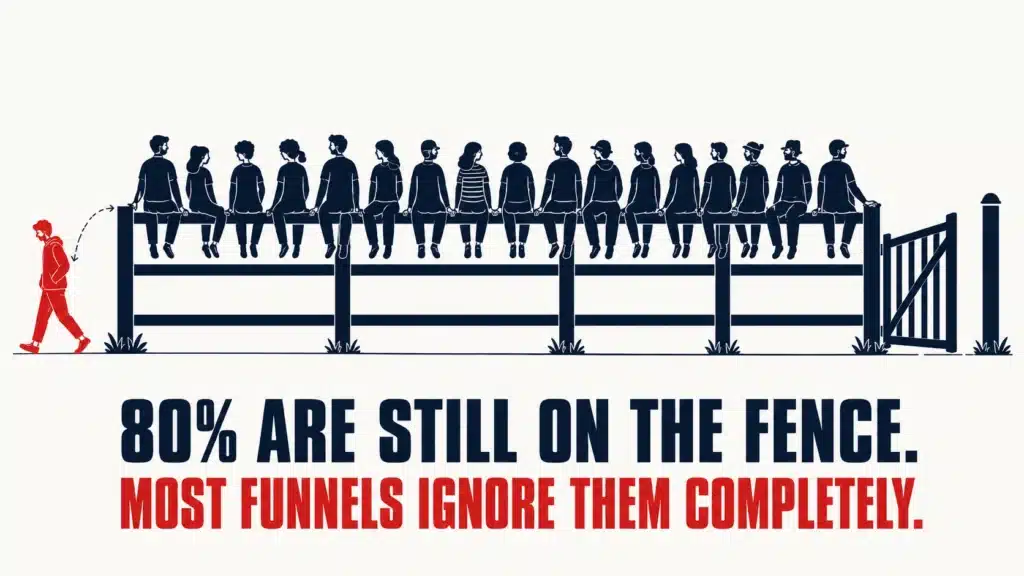
That middle group matters because of the underlying math: 10% buy immediately, 10% will never buy no matter what, and the remaining 80% are sitting on the fence waiting for a reason.
Read that again… eighty percent.
Most funnels build an entire system for the first 10% and just abandon the other eight-zero.
One client sat at 6x ROAS after building out Zone 3 alone. That’s not a rounding error. That’s a whole funnel stage nobody was using, sitting there the entire time.
If your webinar lead generation numbers look fine on paper but flat in your bank account, this is usually why.
Full breakdown of all three zones: The 3-Zone Webinar Funnel: Game-Changing Sales Framework
Stage 3: Fix Your Registration Page Before You Blame Your Ads
If your funnel’s solid and registrations are STILL weak, stop blaming your ads. It’s the page. Almost always, it’s the page.
Most registration pages lead with logic and follow with emotion, which is backwards, and it’s why people bounce before they ever see the sign-up button.
The fix is a three-layer headline stack.
Layer 1, the pre-headline, calls out exactly who’s reading and what hurts. Something like “For founders who want to work less hours each week.”
Layer 2, the main headline, pairs what they want with a frustration they’ve already lived through (marketers call this the polarity effect). For example: “How to have a self-managing business that scales without hiring an expensive COO and documenting every little thing.”
Layer 3, the extended headline, names your unique mechanism without explaining it, because the webinar is supposed to reveal the how, not the page. Just like: “Discover my three-step GrowOS system powered by AI that clones your decision-making process.”
Same rule applies to your bullets.
Weak: “Learn how to use email follow-up sequences to recover no-shows after your webinar.” Boring. Nobody’s clicking that.
Strong: “How to generate sales from people who miss your webinar using the three-step long-tail follow-up system.” See the difference?
Outcome first, a twist, then a mechanism name you don’t explain yet.
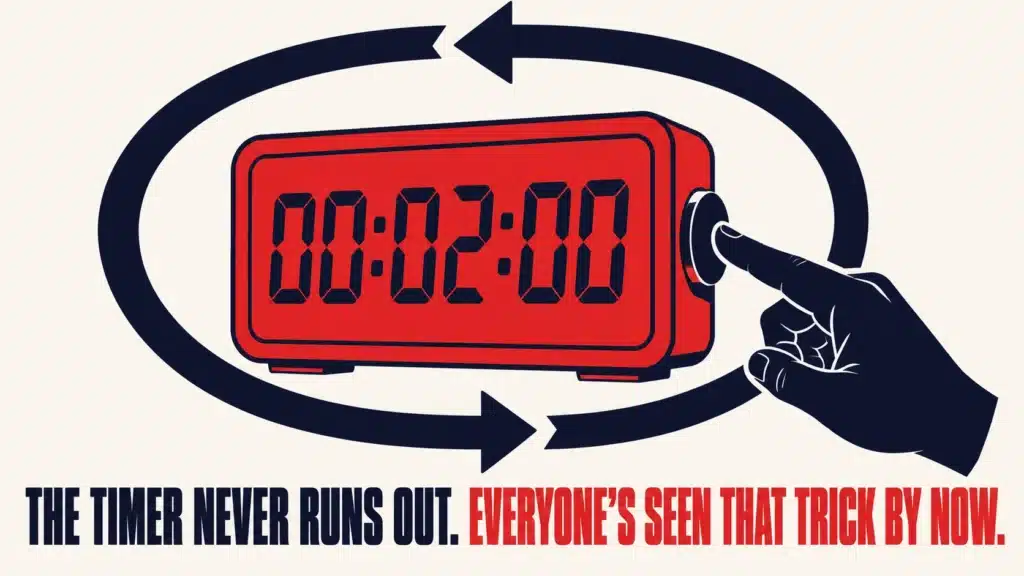
Stack real social proof, real urgency (not a fake countdown timer resetting every time someone refreshes. We all know that trick by now, and so does everyone landing on your page), and story-driven bios on top, and you’re most of the way there.
The whole principle in one line: lead with emotion, follow with logic.
Fixing that sequence alone usually beats a full redesign.
Full breakdown of the 3-layer stack and the complete bullet formula: Better Webinar Registration Page: The 3-Layer Headline Stack That Converts
One more thing…
Even a genuinely great registration page underperforms if it doesn’t match the ad that sent someone there.
In fact, simply rewriting a landing page to echo the ad’s emotional language (rather than starting the pitch over from scratch) took one campaign’s daily leads from 300 to over 900 while boosting ROAS from 1.6x to a much sexier 2.7x.
Before you rewrite a single headline, check your message match first: Landing Page Optimisation: The Simple Tweak That Tripled Leads
Stage 4: Turn Traffic Into Show-Ups, and Non-Buyers Into Buyers
Format, funnel, registration page, all of it assumes you actually have traffic worth sending. Getting that traffic, and squeezing real results out of it, is its own fight, and the old playbook is dying.
Meta’s algorithm now sniffs out repetitive messaging like a bloodhound, your audience has seen every “free training” hook there is, and AI tools are out here competing with actual coaches for attention. Fun times.
But there are four things that are still working.
First, a multi-funnel system: run a real 5–7 day mini email course that builds trust before anyone sees a sales pitch, feed the people who didn’t book a call into a VSL funnel, and run a standing monthly webinar alongside it.
Most businesses put all their traffic through a single door and then act shocked when that door gets expensive to walk through.
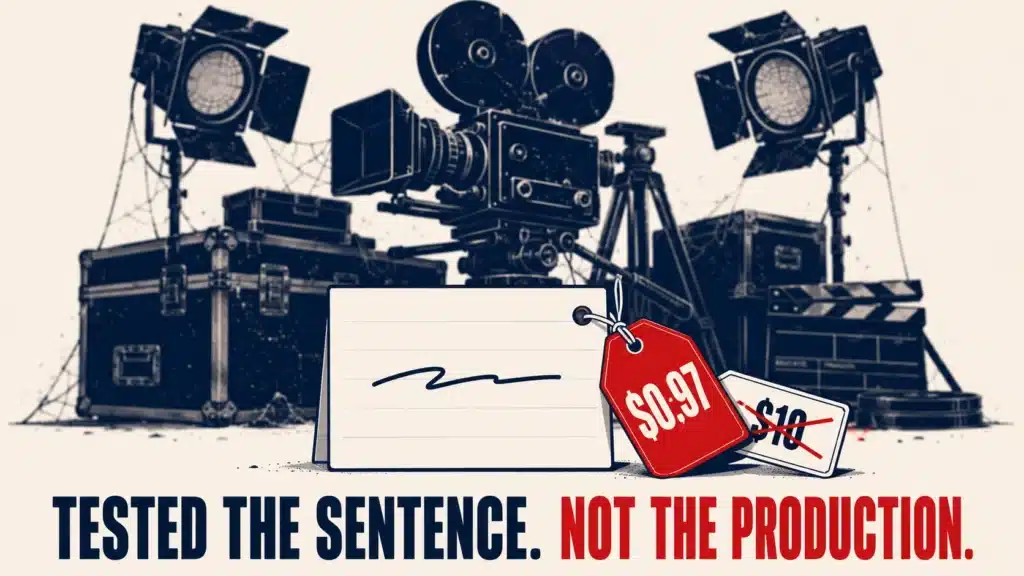
Second, Blitzvertizing: test your message angles BEFORE you spend a cent on production. One client’s cost-per-lead dropped from over $10 to $0.97 through message testing alone.
Read that stat again slowly. That’s not “we found a better platform” or “we increased budget.” That’s the exact same product, the exact same offer, and just testing which sentence resonates before committing to expensive video production.
Most people do this backwards: film first, test never, wonder why CPL keeps climbing.
(We’ve used this to rescue flat funnels too. Check this out: 7 Ways to Make More Money From Your Existing Webinar Funnel (Real Case Studies))
Third (yes, again) the Sprint Webinar, this time purely as a lead-gen tactic: one client hit an 84% show-up rate with 10% of attendees converting straight to booked appointments.
Fourth, AI-powered follow-up, working three separate shifts: before the event, a bot confirms attendance, reschedules no-shows automatically, and asks one sharp question: “What’s your number one challenge with [topic]?”.
After the event, it talks to fence-sitters like a human, digs up their real objection, and routes them to a sales page or a call; and for cold leads who went quiet months ago, it wakes them back up with a new webinar, new content, or a new offer.
None of these four are magic on their own. Stacked together, they’re a system and that’s what actually moves your webinar lead generation numbers, not any single hack.
Full breakdown of all four strategies: 4 Webinar Lead Generation Strategies That Keep Winning
Common Excuses I Hear (And Why They're Wrong)
“My show-up rate is bad because attention spans are dead.”
No, it’s bad because you registered someone and then went silent until the reminder email fired off a day later. Zone 1 exists specifically to fix this. Attention spans didn’t kill your show-up rate. Silence did.
“The market’s saturated, that’s why my leads are so expensive.”
Maybe. Or maybe you’re running the same three ad angles you wrote eight months ago and Meta’s flagged them as repetitive. Test the message before you conclude the market’s the problem. One client of ours cut CPL by over 90% doing exactly that, on the same offer, in the same market you’re calling saturated.
“My webinar converts fine live, I just don’t get enough attendees.”
Then your problem isn’t the webinar. It’s Zone 1, or it’s your format. Go back to Stage 1 and Stage 2 before you touch your pitch.
“I already redesigned my registration page and nothing changed.”
Design isn’t the lever. Sequence is. If your headline still leads with logic instead of emotion, a prettier version of the same mistake converts the same as the ugly one did.
Notice none of these excuses are wrong because the person saying them is dumb. They’re wrong because they’re diagnosing the symptom instead of the stage. That’s the entire point of this guide.
A Quick Diagnostic: Where Is Your Funnel Actually Leaking?
Before you rebuild your whole webinar lead generation setup, figure out which stage is actually broken. The symptoms usually rat it out.
Registrations look great, nobody shows up? That’s Stage 2. Your Zone 1 pre-event system is either missing or way too thin.
People show up, don’t buy, and you never hear from them again? Also Stage 2. You’re missing Zone 3, the same gap that took one funnel to 6x ROAS once it existed.
Traffic’s expensive and leads are inconsistent no matter what you spend? Check Stage 1 first. Remember the SaaS client whose “traffic problem” was actually a format problem.
And if your ads perform but the page converts poorly relative to click-through rate, that’s Stage 3, full stop. Check your headline sequencing, then check message match.
Diagnose before you demolish. Most “webinars don’t work” complaints are one of these four things wearing a trench coat.

Where to Go From Here
Format, funnel, registration page, traffic and follow-up, in that order.
That’s the whole game of webinar lead generation. Most of the time it’s one of these four leaking, not your offer, and definitely not “webinars being dead.”
If you want the money-math version of everything above, the 4-Pillar Framework (Topic, Traffic, Show Up, Convert) is worth a read. It’s also got the show-up-rate math: most webinars average a 20–30% show-up rate, and pushing that to 50% basically DOUBLES your audience without spending one extra dollar on ads.
FAQs: Webinar Lead Generation Ultimate Guide
It depends on what you want people to do the moment the replay ends. If the goal is booking a call or a trial, a short, automated Sprint Webinar (15–20 minutes) converts faster and pulls higher show-up rates. If the goal is a direct sale on a complex or high-ticket offer, a full-length live webinar (45–90 minutes) gives you the runway to build trust before you ask for money.
Show-up rate gets decided before the event, not during it. Build a pre-event sequence that sends daily value emails from the moment someone registers through event day, then layer in a reminder sequence starting about three days out using testimonials and mini case studies to keep re-selling the registration. Sending one lonely reminder email and hoping is the single biggest reason registrations don't turn into attendees.
Two usual suspects: no long-tail follow-up for the 21–30 days after the event, or a registration page whose copy no longer matches the ad driving traffic to it. If your funnel goes quiet after the live event, that's almost always where the leak is.
Structure it as a three-layer headline stack: a pre-headline that names the reader's exact pain point, a main headline that pairs their desired outcome with a frustration they've already lived through, and an extended headline that names your unique mechanism without explaining how it works yet. Back it with real urgency (not a countdown timer that quietly resets) and story-driven bios instead of generic credentials.
There's no universal number. Cost per lead depends heavily on your niche, offer, and traffic source, so treat any flat benchmark with suspicion.
Radical Marketing Can Build This For You
Everything above is exactly what we do at Radical Marketing.
We help coaches, SaaS founders, and service businesses build webinar marketing systems that generate qualified leads and sales.
We’ve generated over 1.5 million leads since 2014 using this exact four-stage system. So if reading through Stage 2 made you wince a little, that’s normal. Most webinar funnels are missing at least one stage, and we’ve probably already fixed the exact one yours is missing.
Let’s talk.