Table of Contents
The Missing Zone That Was Costing Sales
Our client, Mark, was doing everything right: solid webinar lead generation through paid ads, decent show-up rates, and a rewritten presentation.
Yet, he was still losing money on every webinar he ran.
Here’s what nobody tells you: most unprofitable webinar funnels are broken because of architecture… specifically, what happens before the webinar, and in the 30 days after it ends.
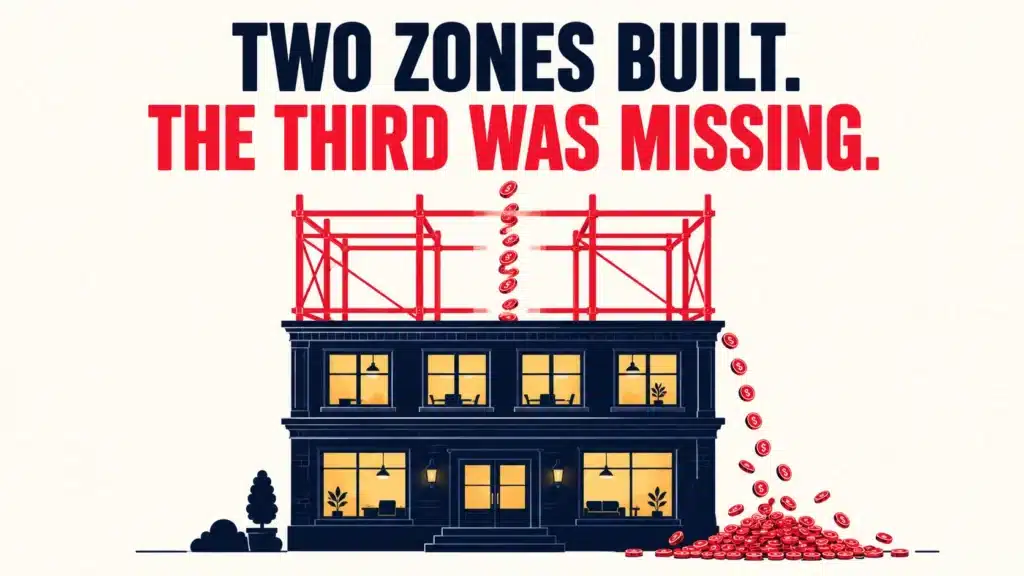
When we dug into Mark’s funnel, the diagnosis was almost too simple: his funnel had two zones.
It was missing the third.
That missing zone took him from losing money to a 6x return on ad spend.
Same ads. Same offer. Same webinar.
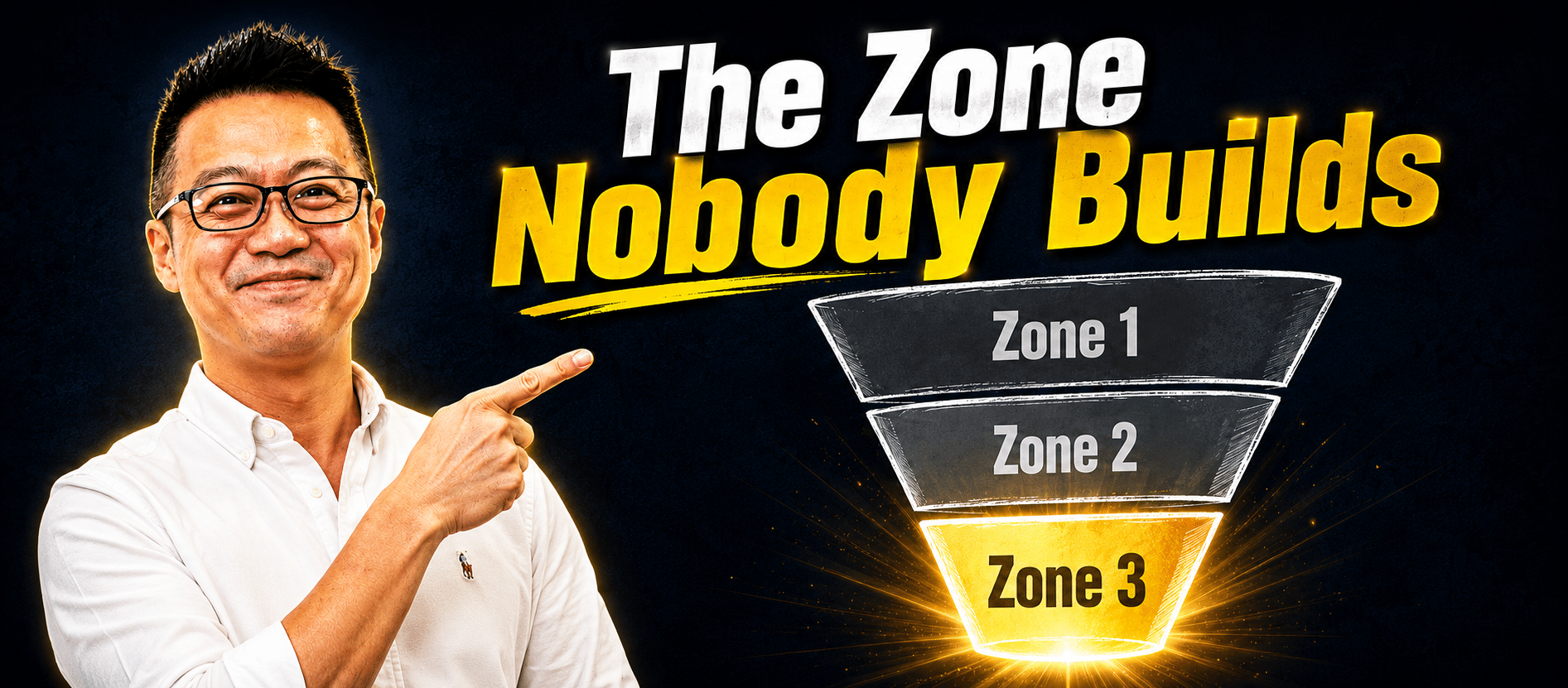
Here’s the full 3-Zone Webinar Funnel architecture.
Watch here:
Spotify listeners, tune in here:
Apple Podcasts listeners, tune in here:
What Is The 3-Zone Webinar Funnel?
- Zone 1 — your pre-event system: everything before the webinar starts
- Zone 2 — the live event itself
- Zone 3 — the 21 to 30 days after the event ends
Most coaches build Zones 1 and 2 and call it a day. Zone 3 barely gets a second thought and that’s precisely where the money dies.
Zone 1: The Pre-Event System
“The time between registration and the live event isn’t dead time. It’s your most valuable real estate.”
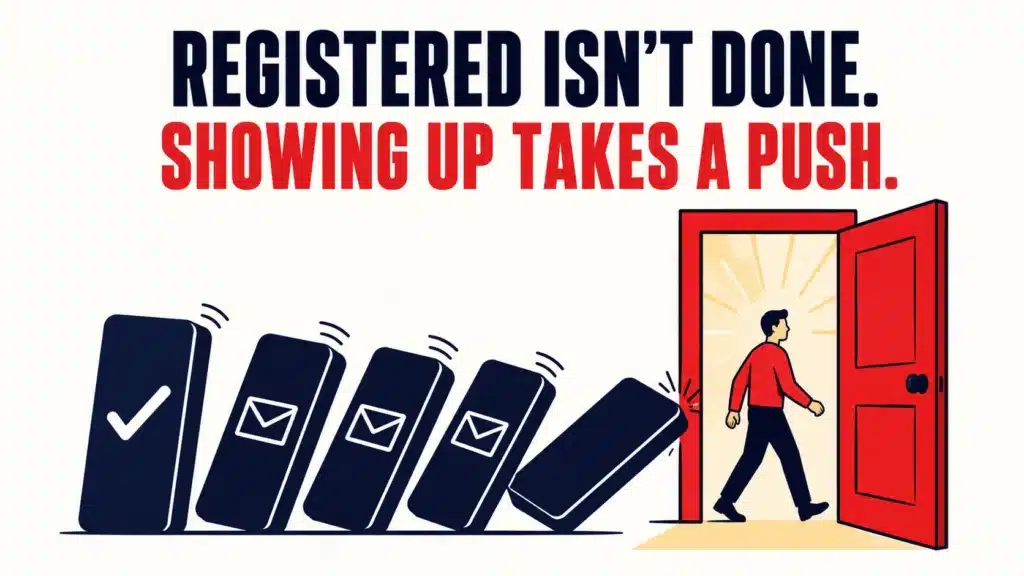
The average webinar show-up rate is 20–30% of registrations.
That means 70–80% of people who raised their hand aren’t even in the room, and most coaches do almost nothing about it.
The Thank You Page Has Three Jobs
The moment someone registers, you have their full attention before life gets in the way. Use it.
- Affirm their decision — make them feel smart for signing up
- Remind them of the pain — they registered because they have a problem; don’t let them forget it
- Get one small action — add the event to the calendar, download a pre-webinar worksheet. A 30-second micro-commitment meaningfully increases show-up rates.
Two Email Sequences Running in Parallel
The Indoctrination Sequence is not reminder emails, it’s trust-building.
Your story. A quick win. A tease of what’s coming. By the time they see your face on screen, they should already feel like they know you.
Send daily value emails right up to event day. Some people will unsubscribe, that’s fine. They weren’t going to buy anyway, and the uplift in show-up rates from people who stay is worth the trade-off.
The Reminder Sequence kicks in around three days out.
Here’s the mistake: don’t just send “hey, friendly reminder!” Every message should be a micro-sale: a testimonial, a mini case study, something that makes them think I need to be in that room. You’re reselling the registration over and over again.
Add WhatsApp or SMS alongside email and you can move show-up rates by 20% or more.
✅Zone 1’s one job: make it feel like a genuinely bad idea not to show up.
Zone 2: The Live Event
“If you don’t sell properly, you’re doing your audience a disservice. They came because they have a problem. You have the solution.”
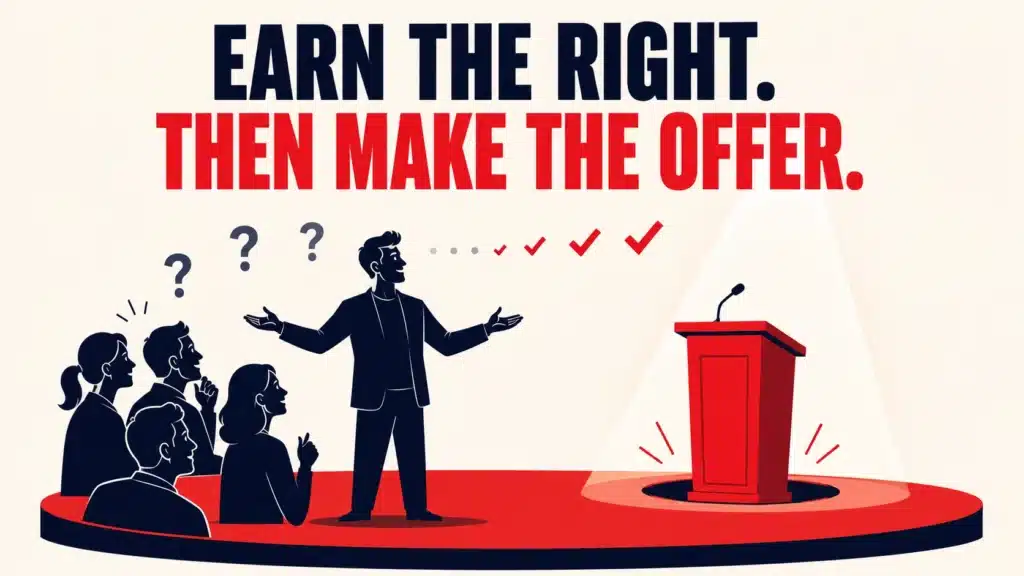
Zone 2 isn’t where you make the sale, it’s where you earn the right to make the offer. That distinction matters.
Part One: Hook and Credibility (First 5–10 Minutes)
Answer the question your audience is silently asking: Why should I listen to this person?
Call out their problems, preview the content and tell them upfront you’ll be making an offer at the end.
Don’t hide it. When the audience knows the pitch is coming, they relax, drop their defences, and actually absorb your content instead of waiting for the shoe to drop.
Part Two: The Content (Middle 70%)
Amateurs open a loop, close it, open another, close it. Neat. Forgettable.
Experts open loops, let them breathe, open more loops, and only close them when moving toward the offer. That tension is what keeps people in the room. Weave in real client stories throughout — facts tell, but stories sell.
Part Three: The Offer and the Three-Path CTA
After 45 minutes of solid content, the worst thing you can do is: “I hope you got some value. Feel free to check out my program.”
Make the offer confidently and use the Three-Path CTA:
- Path 1: Do nothing. Hope things improve on their own.
- Path 2: Take today’s tips and figure it out yourself.
- Path 3: Work with us directly — the fastest path to the result.
When the options are that clear, “I’ll think about it” becomes much harder to default to.
✅Zone 2’s one job: earn the right to make the offer, then make it properly.
Zone 3: The Long Tail Webinar System
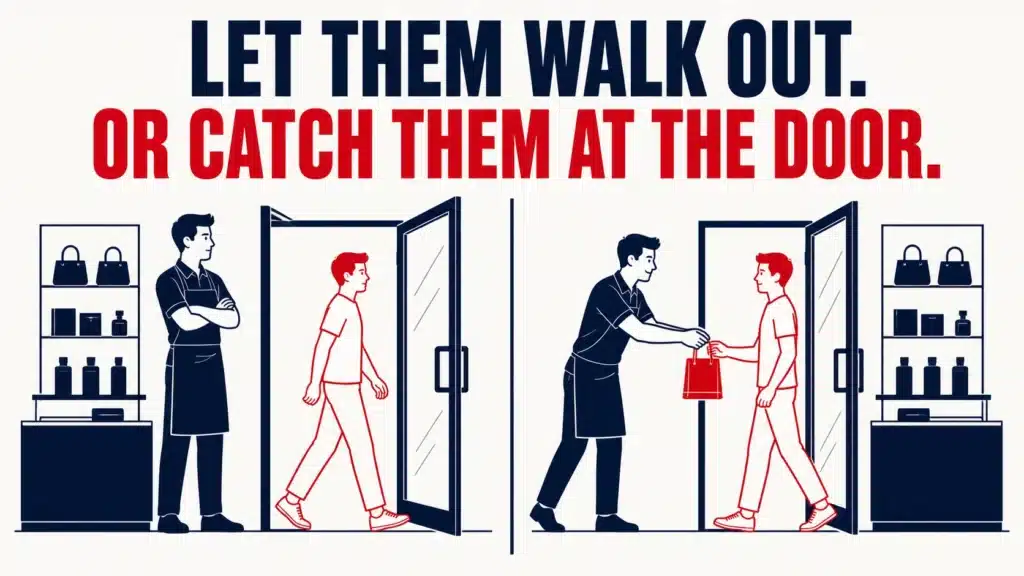
“It’s like a shop assistant spending 45 minutes helping a customer find the perfect product, and then just watching them walk out without doing anything.”
This is where Mark’s money was disappearing.
Zones 1 and 2 were solid but the moment the webinar ended, the funnel stopped cold.
People who attended, engaged, and clearly showed interest but didn’t buy on the day were lumped in with everyone else and received the same generic follow-up as people who’d never shown up at all.
Zone 3 fixes that.
It runs on one principle: send the right message to the right people based on what they actually did.
The Two-Path Segmentation
Segment 1: No-shows and partial attendees.
Invite them to an on-call. Essentially the same webinar, run a second time.
Most coaches assume partial attendees won’t come back. They’re wrong.
Life got in the way. The motivation is still there.
When we ran Mark’s on-call, the replay outsold the main event, people who came back were more committed, and no-shows attended for the first time.
Segment 2: Full attendees who didn’t buy.
Don’t send them back to the replay, they already sat through it.
Direct them to a video sales letter or dedicated sales page instead. Shorter, more direct, and speaks to where they actually are: they know the content but need more time with the offer.
The 21–30 Day Content Sequence
Pull three short content pieces from your webinar (a key insight, a mini case study, something actionable) and send one at a time, each on its own dedicated page.
These are value emails, not sales emails. You’re staying front-of-mind without hammering people with “buy now.”
This is where the 10-80-10 Rule matters:
- 10% of your audience is ready to buy right now
- 10% will never buy — let them go
- 80% are buyers — they’re just not ready yet
Zone 3 is built for the 80%.
Because if your funnel dies after the live event, those people don’t disappear, they eventually buy from someone. Probably the competitor who kept showing up in their inbox.
The Quiz and the Deadline Close
After the content sequence, run a 6–10 question quiz. It re-engages people who’ve gone quiet and segments your audience further so your next message speaks directly to their specific situation.
Then run a deadline close, a specific date when the offer expires or the price changes. “I’ll think about it” almost always means “I’ll forget about it.” A real deadline is the only antidote.
✅Zone 3’s one job: follow up smarter, not just longer. The leads are already paid for. Zone 3 is how you get the most out of both.
The Results: What Happened With Mark
Three months after implementing Zone 3…
Mark was at 6x ROAS.
Not because we overhauled his ads.
Not because we rebuilt his webinar from scratch.
Not because we wrote him a completely new offer.
The only thing that changed was what happened after the event ended and the result was more than 30% additional revenue generated from the exact same event.
Most people think improving webinar lead generation means spending more on ads or creating better creatives. In reality, the biggest opportunity is often the leads you’ve already paid to acquire but never properly followed up with.
FAQs: The 3-Zone Webinar Funnel For Better Conversion
The 3-Zone Webinar Funnel is a framework that splits a webinar campaign into three parts: Zone 1 (the pre-event system before the webinar), Zone 2 (the live event itself), and Zone 3 (the 21–30 days after the webinar ends). Most funnels build only Zones 1 and 2. Zone 3 is where the missing revenue usually hides.
Most unprofitable webinar funnels aren't broken because of weak ads or offers, they're broken because of architecture. Specifically, they're missing Zone 3: a structured 21–30 day follow-up system. Without it, engaged leads who didn't buy on the day get treated the same as people who never showed up at all.
The 10-80-10 Rule splits a webinar audience into three groups: 10% are ready to buy immediately, 10% will never buy, and the remaining 80% are buyers who simply aren't ready yet. Zone 3 follow-up exists specifically to convert that 80% over time instead of losing them to a competitor.
The Three-Path CTA lays out three explicit options at the offer: do nothing and hope things improve, take the free content and figure it out alone, or work directly with the presenter for the fastest result. Naming all three paths clearly makes it harder for prospects to default to "I'll think about it."
A webinar follow-up sequence should run 21 to 30 days after the live event, split by segment: no-shows and partial attendees get invited to a replay or second live session, while full attendees who didn't buy are directed to a video sales letter, followed by a value-content sequence and a deadline close.
Build Your 3-Zone Webinar Funnel With Radical Marketing
Most coaches spend months squeezing more out of Zone 2…
New presentations, rewritten offers, obsessing over live-event conversion rates. Zone 2 matters.
But it’s Zone 3 that generates the consistent, compounding returns that make a webinar lead generation funnel genuinely profitable at scale.
If Zone 3 doesn’t exist in your funnel yet, you already know what to do next.
If you want the full breakdown of how these pieces fit together, read our 6-pillar webinar marketing framework.