

Table of Contents
Most Webinar No-Shows are Created Before Webinar Day
Here’s something that’s going to sting a little.
Many of the people who skip your webinar have already decided not to show up.
That decision was often made days earlier, sometimes the moment they registered.
That’s why so many businesses struggle with webinar attendance despite doing everything they’re supposed to do.
They send reminder emails. They test different webinar times. They add extra follow-ups.
And yet their webinar attendance rate barely moves.
(In fact, if you’re not sure whether your attendance numbers are actually a problem, it’s worth comparing them against the latest webinar attendance and conversion benchmarks before jumping to conclusions.)
Because attendance isn’t usually a reminder problem.
It’s a commitment problem.
The businesses that consistently achieve high webinar show-up rates understand this. They know attendance isn’t won in the final hour before a webinar starts. It’s won throughout the entire registration journey.
From the registration page and thank-you page to every interaction between sign-up and the live event.
Over the last decade, we’ve helped generate millions of webinar registrations for coaches, consultants, course creators, and education businesses.
And after analysing countless campaigns, we’ve discovered something surprisingly simple:
Attendance isn’t luck.
It’s the result of a predictable set of factors that influence whether someone prioritises your webinar or completely forgets they signed up for it.
We call it The Show-Up Formula.
Five simple levers that build commitment, reduce webinar no-shows, and help more registrants actually show up live.
The best part?
You don’t need more registrations. You don’t need more reminders. And you definitely don’t need reminder email number twelve.
You simply need to understand what makes people commit.
Let’s break down the five levers behind The Show-Up Formula.
Watch here:
Why Most Webinar Attendance Strategies Fail
When webinar attendance drops, most marketers immediately start looking at their reminder sequence.
They ask questions like:
- Should we send more emails?
- Should we send them earlier?
- Should we use different subject lines?
- Should we add more SMS reminders?
- Should we send one final “We’re Starting Now!” email?
Before long, they’re deep in a rabbit hole of email automation tweaks, convinced the answer is hidden somewhere between “Last Chance!” and “Final Reminder #7.”
Spoiler alert: it usually isn’t.
Don’t get us wrong. Reminder emails matter. SMS reminders matter too. In fact, both can help improve your webinar show-up rate when used correctly.
But they’re rarely the root cause of low attendance because attendance is really a reflection of commitment.
Think about making a restaurant reservation.
If the restaurant takes no deposit, cancelling is easy. Something comes up, you change your mind, or you simply forget. No harm done.
But if you’ve already put down a deposit or secured the booking with your credit card, your behaviour changes.
Suddenly, showing up matters.
At the very least, you’re going to think twice before bailing.
Your webinar works EXACTLY the same way.
The more invested someone becomes before the event, the more likely they are to attend. Not because they’re forced to. Because they’ve mentally committed to being there.
The mistake most businesses make when trying to increase webinar attendance is that they focus on reminders instead of commitment.
They try to convince people to show up after registration, when the real opportunity was creating a stronger commitment during registration.
The reality is that every stage of your funnel influences your webinar attendance rate.
- The registration page.
- The confirmation page.
- The reminder sequence.
- The thank-you page.
(Even the promise you’re making in your webinar title.)
Every touchpoint either strengthens commitment or weakens it. And when commitment is weak, no amount of reminder emails can save you.
That’s why businesses that consistently nail their webinar marketing don’t obsess over reminders.
They obsess over commitment.
Once you understand that shift, everything about your webinar attendance strategy starts to make a lot more sense.
Let’s look at how they do it.
Spotify listeners, tune in here:
Apple Podcasts listeners, tune in here:
Lever #1: Sell the Seat, Not the Registration
Most webinar registration pages are designed to collect leads.
That’s the problem.
They’re built like forms when they should be built like sales pages.
Think about it. A visitor lands on the page, enters their name and email, clicks submit, and leaves. The entire process takes less time than ordering a coffee.
That’s exactly why it doesn’t work.
A registration is not the same thing as a commitment.
Someone can sign up while scrolling Instagram, waiting for lunch, or pretending to pay attention during a meeting. Five minutes later, they’ve completely forgotten your webinar exists.
That’s why so many businesses end up with impressive registration numbers and disappointing webinar attendance rates.
The registration happened. The commitment never did.
If you want to increase webinar attendance, your registration page has one job: sell the outcome before asking for the opt-in.
In other words, sell the seat.
What specific result will attendees walk away with? What problem will they solve? What transformation will they experience?
The more concrete the promise, the stronger the commitment.
“Join our free marketing webinar” is easy to ignore.
“How to Generate 20 Qualified Sales Calls a Month Without Increasing Ad Spend” is much harder to forget.
One is information.
The other is an outcome.
And people don’t show up for information. They show up for outcomes.
Because when it comes to webinar show-up rates, 100 committed registrants will always beat 1,000 casual sign-ups who treat your webinar like that gym membership they swore they’d use this year.

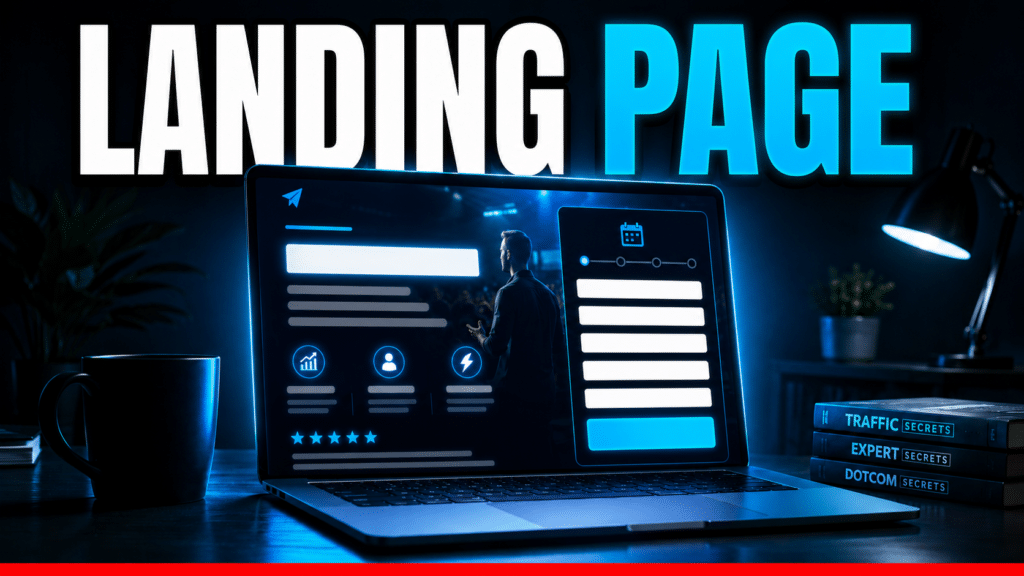
Lever #2: Make Your Webinar Landing Page Do the Heavy Lifting
Most businesses think the purpose of a webinar landing page is to generate registrations.
It’s not.
The purpose of a landing page is to create commitment. The registration is simply a by-product.
That’s an important distinction because many webinar pages focus on collecting an email address rather than convincing someone that showing up will actually be worth their time.
And that’s where attendance starts to leak.
It usually begins with the headline.
Most webinar headlines are technically accurate but completely forgettable.
“Join Our Free Marketing Webinar.”
“Learn How To Grow Your Business.”
“Discover Proven Sales Strategies.”
Nobody clears their calendar for that.
Your headline needs to answer one question immediately: What’s in it for me?
That’s why specificity matters.
“How to Add 20 Qualified Sales Calls Per Month Without Increasing Your Ad Spend” is far more compelling because the outcome is clear and measurable.
Once you’ve captured attention, reinforce it with tangible outcomes, not generic promises. Show attendees exactly what they’ll learn, what they’ll achieve, and why they should trust you.
And don’t forget social proof.
Testimonials, case studies, and client results reduce uncertainty – one of the biggest causes of poor webinar attendance.
Because a great landing page doesn’t just generate registrations. It starts building commitment.
And commitment is what helps increase webinar attendance long before webinar day arrives.
Lever #3: Win the Gap Between Registration and Webinar Day
Most businesses work hard to get the registration. Then they disappear until the webinar starts.
That’s a costly mistake.
Because the period between registration and the live event is where many webinar no-shows are created.
Think about it. Someone signs up on Monday, and your next communication arrives ten minutes before you go live on Friday. By then, they’re trying to remember who you are and why they registered in the first place.
Life gets busy.
Meetings appear out of nowhere.
Kids need attention.
And Netflix somehow launches a new series at the exact worst possible moment.
That’s why businesses that consistently increase webinar attendance don’t leave this period to chance.
They ACTIVELY manage it.
Start with a simple multi-touch reminder sequence. A reminder 24 hours before, another 1 hour before, and a final reminder 5 minutes before the webinar helps keep the event top of mind without becoming annoying.
Then add SMS reminders.
Let’s be honest. You’re probably not beating Mum, WhatsApp, and 73 unread emails for attention. A text message cuts through the noise and can significantly improve webinar show-up rates.
Finally, build anticipation.
Use your thank-you page to encourage attendees to add the webinar to their calendar, submit a question, or download a resource.
Every small action increases commitment.
And commitment (not reminders alone) is what turns registrations into attendees

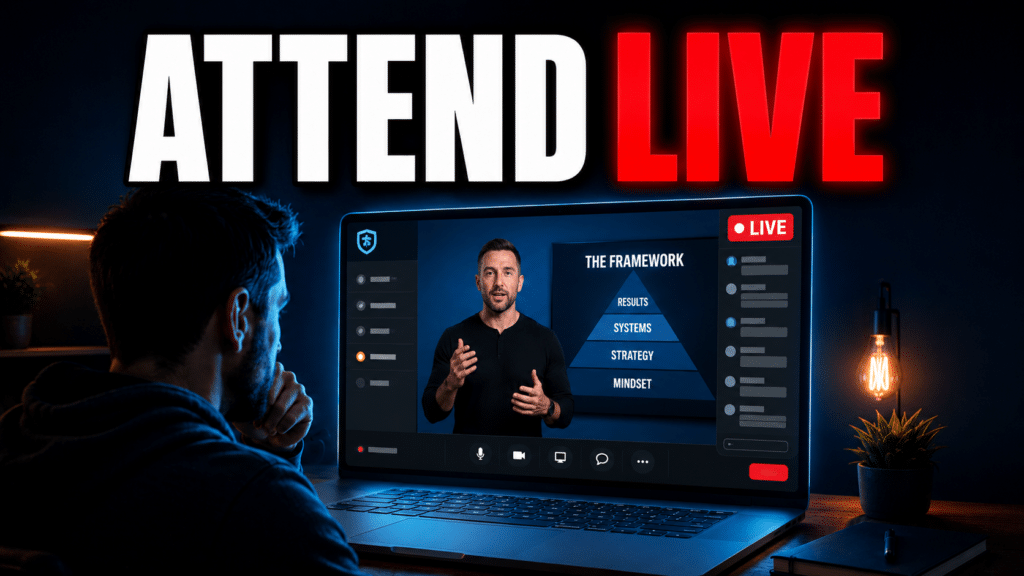
Lever #4: Give People a Reason to Attend Live
Here’s a difficult question: why should someone attend your webinar live if they already know they’ll get the replay?
Put yourself in their shoes. If you could watch the recording tomorrow, next week, or whenever you felt like it, would you block out time on your calendar today?
Probably not.
That’s exactly why one of the biggest killers of webinar attendance is over-reliance on replay access.
People tell themselves, “I’ll watch it later.” The problem is that later rarely arrives. The replay becomes less of a backup plan and more of a permission slip to skip the live event altogether.
It’s a bit like buying exercise equipment and promising yourself you’ll start on Monday. Technically possible. Historically… not looking great.
That’s why businesses with high webinar show-up rates make the live experience noticeably better than the replay.
One way is through live Q&A sessions. Information is valuable, but direct access is even better. A replay can’t answer questions that are unique to someone’s situation.
Another approach is offering live-only bonuses, such as templates, resources, training, or special offers available only during the session.
You can also reserve key insights or case studies exclusively for attendees.
The goal isn’t to punish replay viewers. It’s to make attending live the obvious choice.
When the live experience delivers more value, people stop saying “maybe later” and start showing up.
Lever #5: Shorten the Commitment
Let’s finish with the lever almost nobody talks about.
What if people aren’t skipping your webinar because they’re uninterested?
What if they’re skipping it because you’re asking for too much time?
Most businesses assume longer webinars produce better results. More content. More teaching. More time to build trust.
Sounds logical.
It’s also not always true.
Think about these two invitations:
“Join me for a 90-minute webinar.”
“Join me for a focused 20-minute training.”
Which one feels easier to commit to?
Exactly.
One feels manageable. The other feels suspiciously like a meeting that should have been an email.
That’s why one of the simplest ways to increase webinar attendance is by reducing the commitment you’re asking people to make.
Long webinars create friction. People hesitate, tell themselves they’ll decide later, and later often becomes never.
Shorter sessions feel different. They’re easier to fit into a busy schedule and easier to say yes to.
This is one reason we’ve seen strong results with Sprint Webinars. Instead of stretching content across 90 minutes, they focus on delivering a specific outcome quickly.
No filler.
No unnecessary detours.
No 15-minute origin story nobody asked for.
Just value.
The result? Higher webinar attendance rates, stronger engagement, and often better conversions.
Because when you respect people’s time, they’re far more likely to give it to you.

The Show-Up Formula in Action
If you’re trying to increase webinar attendance, don’t start by sending more reminder emails.
Start by looking at commitment.
That’s the common thread running through every lever we’ve covered.
Not better software.
Not more automation.
And definitely not another “LAST CHANCE!” email sent at 11:59 PM that somehow looks exactly like the other six you sent yesterday.
Commitment.
Ask yourself:
- Does my registration page sell the outcome?
- Does my webinar landing page build desire?
- Am I creating anticipation between registration and the event?
- Have I given people a compelling reason to attend live?
- Am I asking for more time than necessary?
The answers to those questions will tell you far more about your webinar attendance rate than any open-rate report ever will.
You don’t need to rebuild your entire funnel overnight.
In fact, you probably shouldn’t.
Find the biggest leak and fix that first.
Because attendance isn’t driven by one magical tactic. It’s driven by a series of small commitments that build on one another over time.
A stronger headline creates more intent.
A better follow-up sequence creates more anticipation.
A live-only bonus creates more urgency.
A shorter webinar creates less resistance.
Individually, these changes may seem small.
Together, they can dramatically improve webinar show-up rates.
That’s the power of The Show-Up Formula.
One Final Thought
Most businesses focus on webinar attendance when the webinar is about to begin.
The best businesses focus on it from the moment someone lands on the registration page.
That’s the difference.
One group spends the webinar day hoping people show up.
The other builds a system that makes showing up the natural outcome.
Truthfully, your webinar attendance rate isn’t determined by the reminder email you send an hour before going live.
It’s determined by everything that happened before that – the promise on your registration page, the anticipation you create between registration and the event, the value attached to attending live, and even the amount of time you’re asking people to commit.
Most businesses can see meaningful improvements by fixing just one weak point in their funnel.
Start there.
Strengthen the commitment.
Measure the results.
Then improve the next lever.
Because when commitment goes up, attendance follows.
And when more people show up, everything else gets easier: more engagement, more conversations, more qualified prospects, and ultimately, more sales.
After all, even the world’s greatest webinar pitch performs poorly in an empty room.
That’s the real power of The Show-Up Formula.
Attendance isn’t luck. It isn’t timing. And it certainly isn’t magic.
It’s commitment built on purpose.
FAQs: How to Increase Webinar Attendance
Most businesses see between 20% and 40% of registrants attend live.
But attendance alone isn't the goal.
Committed attendance is.
We've seen smaller webinars outperform larger ones simply because the people in the room were more engaged. Focus on attracting the right attendees first. The numbers usually follow.
Start with the fundamentals:
- Improve your registration page
- Add SMS reminders
- Create a live-only incentive
- Encourage calendar bookings
Most businesses don't need more registrations. They need more commitment from the people already registering.
Absolutely.
Despite being declared dead every year since 2005, email keeps refusing to cooperate.
The key is using multiple reminders, not relying on a single email the night before. Think nudges, not harassment.
Usually, yes.
But if the replay offers exactly the same experience as attending live, you're giving people permission to skip.
The best webinars include something attendees can only get live—whether that's a Q&A, bonus, special offer, or exclusive insight.
Two different problems. Low show-up despite decent registration numbers is a commitment gap, that's what the Show-Up Formula fixes.
Low registration numbers usually trace back to a vague landing page headline (see Lever #2). A specific, outcome-led promise tends to lift both registration and attendance at once, since the same specificity that earns a sign-up is what earns commitment.
If your landing page is already strong and registrations are still the bottleneck, that's a traffic/ad question, not a webinar-funnel one.
Need Help Getting More People to Show Up?
At Radical Marketing, we’ve spent more than a decade helping coaches, consultants, course creators, and service businesses build webinar funnels that attract committed attendees, not just registrations.
We’ve helped clients improve webinar attendance rates, reduce webinar no-shows, and turn more live attendees into paying customers.
So if you’d like a second opinion on your webinar funnel, we’d be happy to help.
We know, registrations are nice. But registrations don’t buy. Attendees do.
Get in touch with the Radical Marketing team today, and let’s identify what’s stopping people from showing up and build a webinar funnel that keeps your virtual room full.