Table of Contents
How Digital Marketing Webinars Work as a Growth Channel
Most businesses still treat a webinar like a one-off event. Book the date, build the slides, run some ads, hope for the best.
That’s not what digital marketing webinars are for anymore.
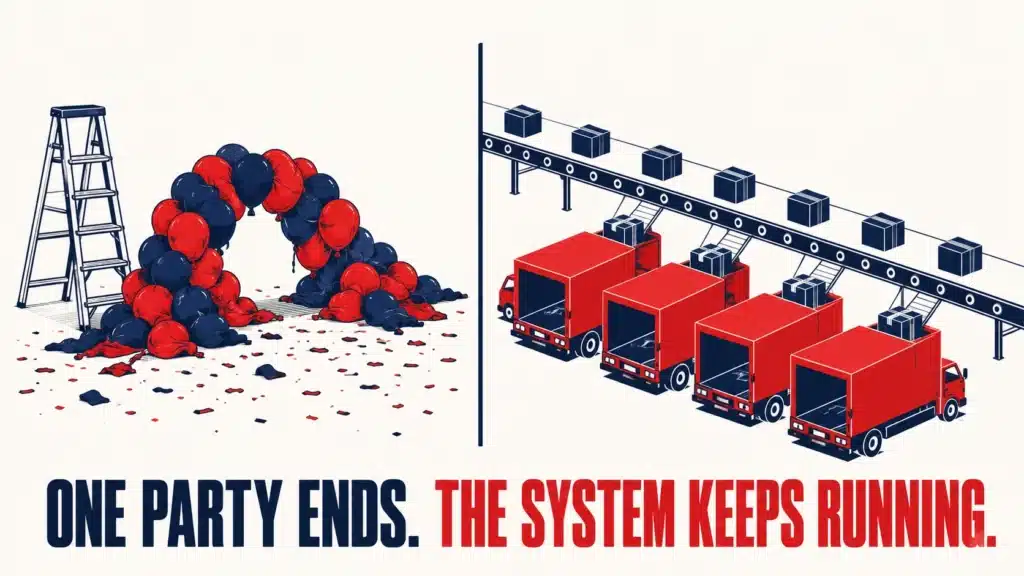
Used properly, a webinar isn’t an event. It’s a channel, one that sits inside your ads, your email list, your follow-up sequences, and your sales process, working on all of them at once. That shift, from “event” to “channel,” is the entire point of this guide.
We’ve broken this pillar into four chapters, each pulled from a deep-dive we’ve already published. Read them in order, or jump straight to whichever one solves your current problem
Why "Digital Marketing Webinars" Is the Right Frame
Search “webinar marketing” and you’ll mostly get advice about hosting: which platform to use, how to build slides, how to keep people watching. Useful, but incomplete.
Digital marketing webinars are a different conversation entirely. The real question isn’t “how do I run a webinar?” It’s how to use webinars for digital marketing…
How a single event feeds your ad targeting, your email list, your retargeting audiences, and your sales pipeline, all at the same time.
That distinction matters because it changes what you measure. A webinar-as-event gets judged on attendance. A webinar treated as a genuine digital marketing channel gets judged on cost per lead, show-up rate, engagement, and revenue, tracked as one connected chain, not four separate scoreboards that never talk to each other.
It also changes who the webinar is for.
An event is built around a topic. A channel is built around an audience, and that’s a much bigger shift than it sounds. Coaches, tuition centres, SaaS founders, and creators all need a completely different build, because they’re not selling the same way or to the same person.
There’s a search-behaviour reason this framing matters too.
Someone typing “webinar marketing” into Google is usually further along already, comparing platforms or agencies. Someone searching around the phrase we’re using here is often still working out whether webinars belong in their marketing mix AT ALL, alongside their ads, email, and content.
That’s an earlier, more educational stage of the buying journey, and it’s exactly why this pillar exists as its own thing rather than folding into our broader webinar marketing content.
Chapter 1: The Current State
Start with the state of digital marketing webinars in 2026, because it sets up everything that follows.
Four shifts are stacking on top of each other right now. AI has made execution faster, but it hasn’t replaced strategy.
If anything, it’s exposed which businesses never had one to begin with. Free AI answers mean a webinar can’t just “teach” for sixty minutes and call it valuable content anymore; audiences already have that information sitting in their pocket, so belief has to do the work information used to do.
Ad platforms like Meta’s Andromeda now read what your ad is actually communicating, not just whether it’s formatted correctly, which punishes lazy, near-identical variations. And the businesses still sending one generic follow-up message to every single lead, regardless of what that lead actually did during the event, are quietly leaking revenue they already paid to generate.
None of these four shifts is really about the tools themselves. They’re about what happens once everyone has access to the same tools.
The businesses building theirs on real strategic thinking are pulling further ahead of the ones running on autopilot, and that gap is only going to widen from here.
There’s a practical takeaway buried in that last shift too.
If you’re only sending one version of your follow-up email to everyone who registered ( regardless of whether they showed up, watched the whole thing, or dropped off at minute ten) you’re leaving money on the table that’s already paid for.
Two versions is a reasonable starting point. You don’t need a fully personalised system on day one. You just need to stop treating every lead identically.
Chapter 2: Real Client Case Studies
Strategy is a lot easier to trust once you’ve seen it actually work. These 5 digital marketing webinar examples with real client ROI cover five campaigns, unfiltered, including the ones that didn’t go smoothly at first.
Jerry, a tuition centre owner, grew his business 177% running one monthly webinar as the anchor of his entire funnel.
Michael, a property investing coach, watched a campaign quietly bleed money because his team was only tracking cost per lead. A full-funnel visibility flipped that into a 1.65X return within a single month.
Yasir’s story is the useful failure of the bunch: cheaper leads with a near-zero show-up rate converted nobody, proving cheaper is NOT automatically better.
Mark dropped his cost per lead from £16 to £6 by rebuilding his sign-up page around real testimonials rather than polish.
And Jordan’s campaign is the clearest answer to how to run a digital marketing webinar that converts when you’re starting from scratch. Not one big fix, but show-up rate, then engagement, then sales, tackled one at a time.
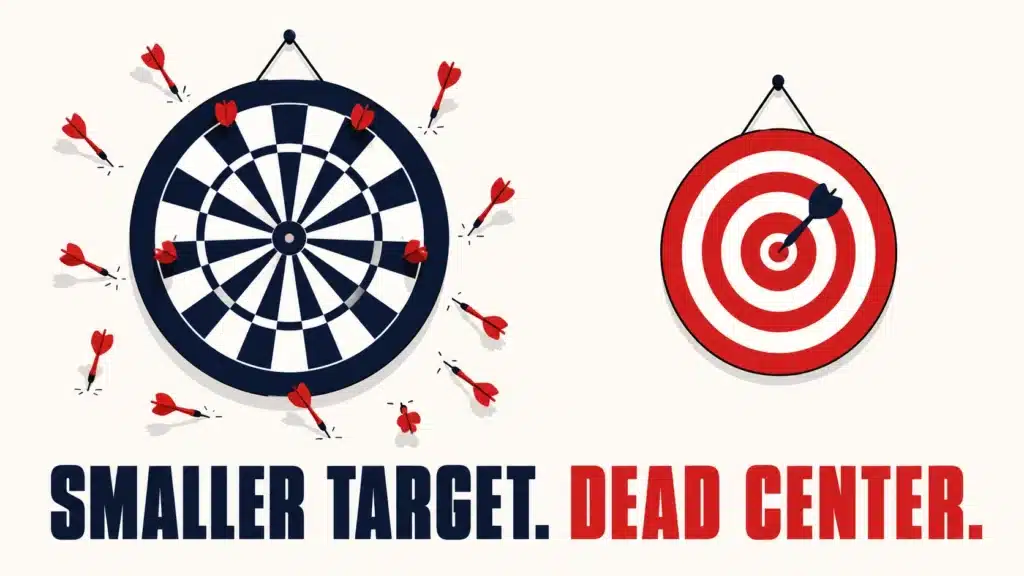
The common thread across all five: nobody obsessed over vanity metrics, a smaller well-matched audience beat a bigger loosely-interested one every single time, and no webinar funnel was ever truly “finished.”
Worth noting too: none of these five started strong and stayed strong without intervention.
Michael’s account had been running well for years before it quietly started losing money, and it took someone actually pulling the sales numbers, not just the ad dashboard, to catch it.
That’s the pattern underneath most of these stories. The businesses that caught problems early were the ones checking full-funnel numbers regularly, not just glancing at cost per lead once a month and assuming everything downstream was fine.
Chapter 3: Where This Is Heading
Once you know what’s working today, the obvious next question is what keeps working. The future of webinar marketing: 2026 great reset covers exactly that.
The obvious predictions (AI avatars hosting your event, VR conference rooms) aren’t where the actual money is. The real shift is quieter.
Interactivity now generates the data that personalised follow-up runs on…
Voice AI is reactivating cold leads and confirming registrations for pennies per call…
And pure teaching content is steadily losing ground to proof, because a chatbot can already explain the “how” for free.
What it CAN’T produce is a room full of people who believe change is possible for them, or a presenter who’s actually lived through the exact problem being solved.
That’s the throughline for any serious digital marketing webinar strategy for coaches in particular: technology should remove the repetitive work so the human part (the part only a real presenter can do) gets stronger, not smaller.
A voice AI system can confirm a seat or restart a stalled conversation. It cannot be the reason someone believes change is possible. That still has to come from a real person.
The practical version of this, for anyone deciding what to prioritise first: weak interactivity, a follow-up sequence that ends after one generic replay email, and no voice channel for cold leads or no-shows are the three most common gaps right now.
Most businesses don’t need to fix all three simultaneously. Pick whichever one is quietly costing the most money today, fix that, then move to the next.

Chapter 4: Hiring the Right Team
Once you’re convinced webinars deserve a real strategy, the next decision is who actually builds it. Digital marketing webinar services: how to hire with confidence is the hiring guide.
The short version: ask any agency about a client who didn’t work out.
One that only ever shows you wins isn’t being modest. It’s being selective.
Beyond that one question, look for full-funnel expertise rather than an agency that’s only ever managed ad spend, proof across a range of accounts rather than one impressive screenshot, a strategy built specifically around your audience rather than a recycled template, and evidence they’ve genuinely tested something new in the last twelve months.
This matters even more for webinar marketing for coaches and consultants specifically, since coaches typically rely on the presentation and offer itself to do most of the converting, far more than a business selling a straightforward product.
A template built for someone else’s audience rarely survives contact with yours.
A handful of questions tend to reveal the biggest gaps during a discovery call:
- Who actually handles the presentation and offer? Not just who manages the ad account, but who is responsible for the webinar strategy itself.
- Can they show results from more than one comparable client? A single success story may not prove a repeatable system.
- What has changed about their approach in the past year? A strong agency should be adapting with the market, not repeating the same playbook.
- What does a realistic timeline to profitability look like for a first-time presenter? Good partners should set clear expectations instead of promising overnight results.
An agency that answers all four clearly is usually a safer choice. One that stays vague on two or three deserves a closer look before you sign anything.
The Metrics That Actually Matter
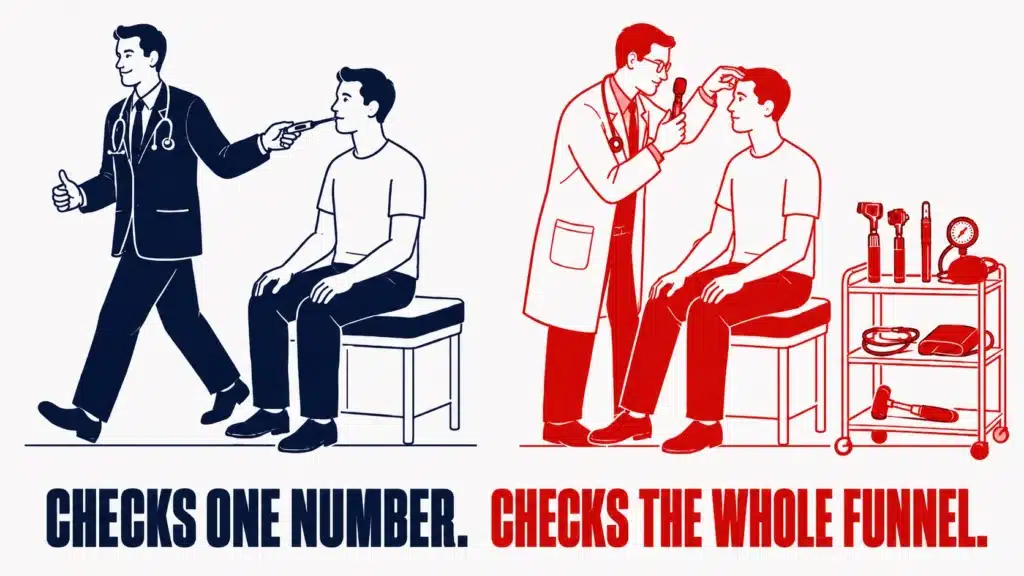
Everything above keeps coming back to the same idea: measure the whole chain, not one link in it.
In practice, that means tracking four numbers together rather than in isolation.
Cost per lead tells you what you’re paying to get someone’s attention, but nothing about whether that attention turns into revenue.
Show-up rate tells you whether your reminders and pre-event nurture are actually working, since an unattended registration is a wasted ad dollar.
Engagement (things like poll responses, chat activity, and how far through the presentation someone stays) tells you whether the content itself is landing, and it’s also the raw data personalised follow-up depends on.
Revenue is the only number that settles arguments, and it’s the one number cost per lead alone can never answer by itself.
Track all four together, on the same dashboard if you can manage it, and most of the mistakes covered in the case studies above become obvious a lot sooner than they were for the clients who lived through them.
How to Use Webinars for Digital Marketing: A Quick Framework
If you’re starting from zero, here’s the short version of how the four chapters above fit together in practice.
First, get honest about where the market actually is right now, not where it was two years ago. That’s your current-state check.
Second, look at proof, not theory. Real campaigns, real numbers, real mistakes included, tell you far more than a polished case study slide ever will.
Third, keep half an eye on where things are heading, particularly around interactivity, follow-up personalisation, and voice AI, so you’re adjusting before a bottleneck becomes a crisis rather than after.
Fourth, if you’re bringing in outside help, hire for full-funnel thinking, not just media buying.
None of that requires a complete rebuild overnight. Most businesses see the fastest movement by fixing one weak link in the chain at a time, the same pattern that shows up again and again across the case studies above.
Where This Leaves You
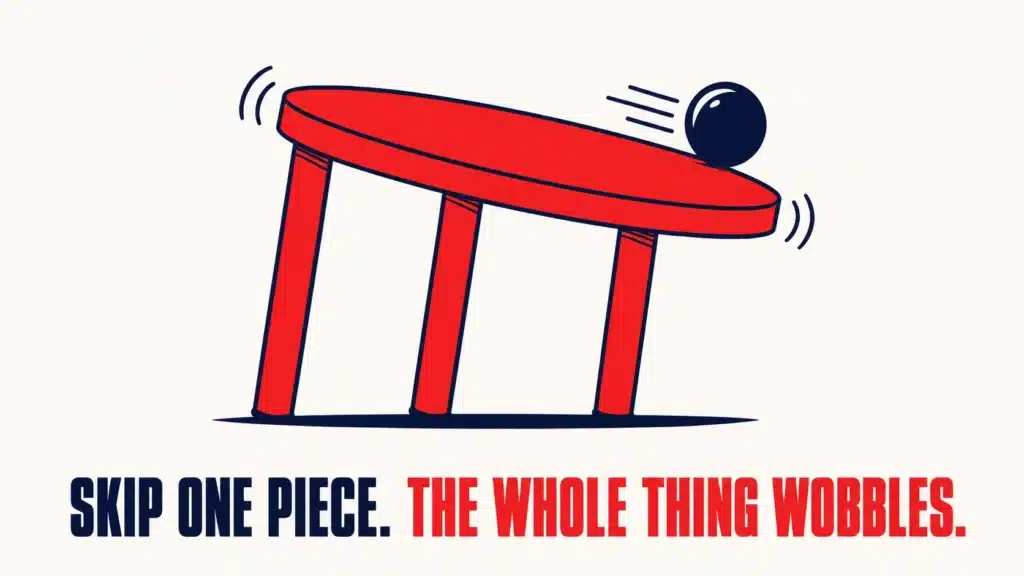
Put the four chapters together and a pattern shows up: this whole system works when it’s treated as one connected chain.
Current market shifts inform strategy, strategy gets proven (or disproven) by real campaigns, proven approaches point toward what’s coming next, and the right team turns all of that into something repeatable rather than a one-off event.
Skip any one of those four pieces and the whole thing wobbles.
Chase future trends without proof they work for your specific audience, and you’re gambling.
Hire an agency without checking full-funnel expertise, and you’re back to judging success on cost per lead alone.
Read the state of the industry without a plan to act on it, and it’s just interesting news.
So, don’t sabotage yourself. Most business owners would read one chapter, get excited, and try to implement it in isolation: bolting a voice AI follow-up onto a webinar that never had a clear audience to begin with, or hiring an agency before they’ve worked out what “working” even looks like for their business.
The chapters build on each other for a reason.
State, then proof, then trend, then team, roughly in that order.
FAQs: Digital Marketing Webinars
A digital marketing webinar is a live or automated online presentation used as part of a broader digital marketing funnel (ads, email, retargeting, and follow-up) rather than a standalone event. The goal is generating and converting leads, not just delivering a presentation.
A regular webinar is judged mainly on attendance and content quality. This kind is measured across the whole funnel instead: cost per lead, show-up rate, engagement, and revenue, tracked as one connected chain rather than isolated metrics that don't tell you much on their own.
Treating cost per lead as the only metric that matters. Several of our case studies show campaigns that looked healthy on the front end while quietly losing money further down the funnel.
No. AI speeds up execution (ad copy, follow-up messaging, live interaction) but the current data shows strategy still has to come from people. Businesses leaning on AI without any original thinking end up sounding identical to every competitor using the same tools.
Look for full-funnel expertise, proof across a range of clients rather than one case study, a personalised strategy rather than a template, and honesty about what hasn't worked. The full hiring breakdown covers the exact questions worth asking on a discovery call.
Ready to Put This Into Practice?
Reading this pillar is the easy part. Building a funnel that actually converts is where most businesses stall, usually somewhere between “we know we should personalise follow-up” and actually doing it.
If you want a system built specifically around your audience rather than a template, our webinar marketing services cover the full chain. From strategy, ad creative, the presentation itself, to everything that happens after someone attends.
If you’re a coach or consultant working with tighter timelines, Sprint Webinar is built for exactly that.
Whichever chapter above hit closest to home, that’s usually the right place to start fixing things first.