The Real Reason Most
Businesses Can't Scale
Here’s what I’ve noticed after serving hundreds of different businesses and generating close to 2 million leads over the past decade.
Many of these businesses (i.e. coaches, course creators, and service providers) are genuinely excellent at what they do.
The problem is they do marketing and client acquisition randomly.
A bit of social media posting here. Some LinkedIn networking there. Paid ads when they’re feeling brave.
Sometimes they even outsource it to an agency – and if they’re lucky they’ll get a team that’s actually competent.
Otherwise, they’ll just get fed mountains of reports showing awesome “likes” and “engagement”…
…but ZERO new clients.
(Believe me when I say that this is an all-too familiar situation.)
The solution?
A system.
A predictable engine that lets you know, before you even spend a dollar on ads, that your investment is going to come back with dividends.
I call this the “Perpetual Profit Engine”.
And having it is a REQUIREMENT for businesses to actually scale in 2026.
OR Listen Here:
What This Post Covers
(And Why You Should Care)
This is Part 1 of a 5-part series called the Perpetual Profit Engine.
Think of it as a blueprint for building a client acquisition machine that actually works predictably. Month after month. Without you having to reinvent the wheel every time you want new clients.
In this post, I’m breaking down the 10 non-negotiable protocols that power the engine. These are the same protocols we use with clients at Radical Marketing to turn “hope and pray” marketing into something that resembles an actual business.
Fair warning: This isn’t sexy. There’s no “one weird trick” here. Just a system that compounds over time.
Let’s get into it.
What Is a Perpetual Profit Engine?
Most marketing funnels look something like this:
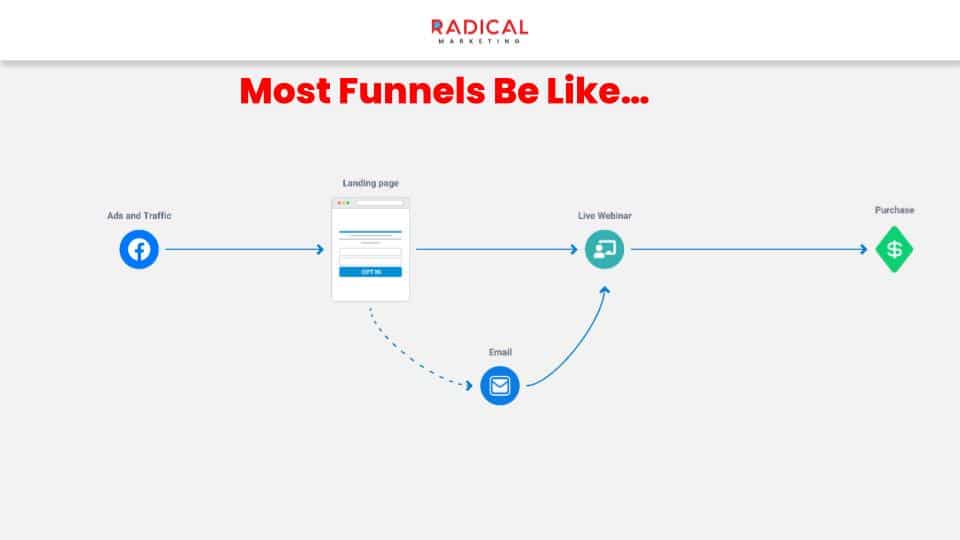
Ads → Landing Page → Event → Maybe Some Emails → People Buy Or They Don’t
Simple, right?
Also risky.
Because everything depends on whether that one event goes well. If you have an off day, if the tech breaks, if your energy is weird because you had a fight with your spouse that morning… your whole month is tanked.
That’s not a business. That’s a tightrope walk.
A Perpetual Profit Engine looks different.
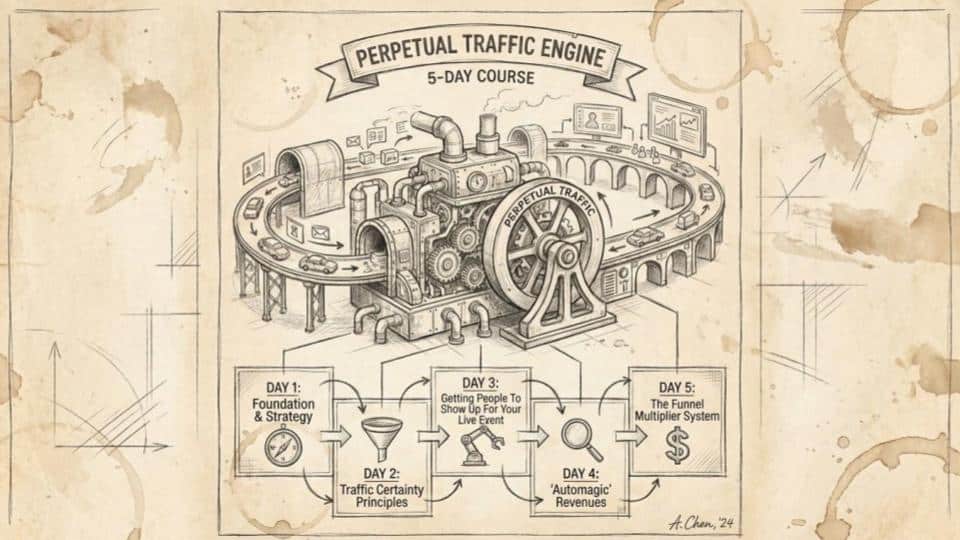
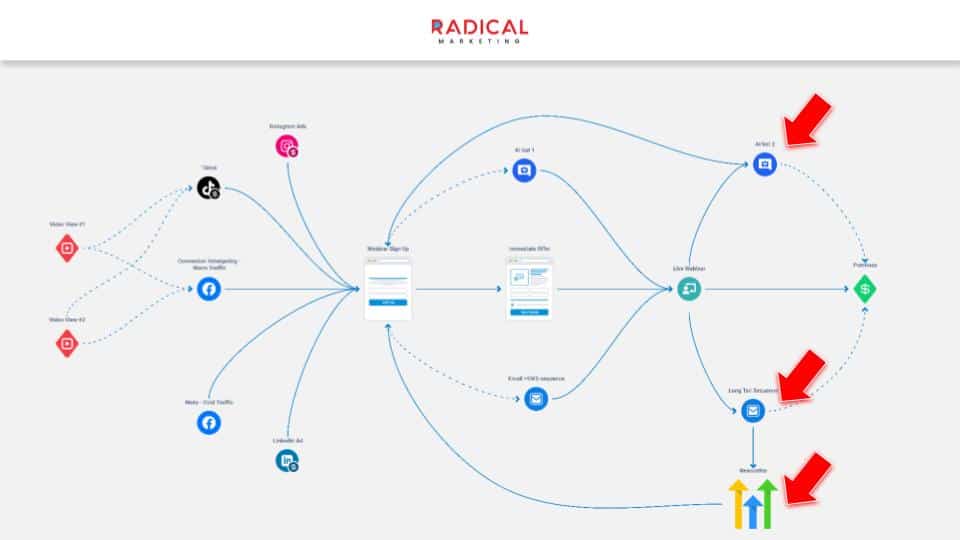
It has multiple touchpoints, multiple opportunities for conversion, and multiple ways to nurture people who aren’t ready to buy yet.
It’s designed to:
- Convert people at different stages of readiness
- Recover people who fall off at any point
- Build an asset (your list) that grows more valuable over time
- Compound results instead of starting from zero every month
The engine has 10 protocols. Miss even one, and the whole thing sputters. Get all 10 right? They compound on each other in ways that’ll make your accountant do a happy dance.
Let me walk you through each one.
Protocol 1: Traffic That Actually Converts
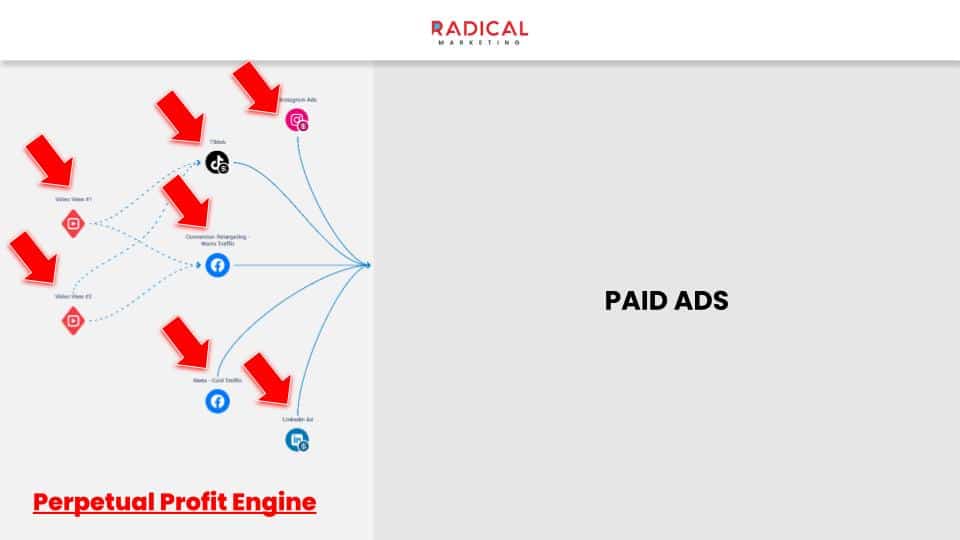
This might seem obvious, but you’d be surprised how many people get it wrong.
Traffic isn’t just about volume. It’s about getting the RIGHT people to your landing page.
I’ve seen businesses celebrate getting thousands of leads, only to realize none of them could actually afford the offer. That’s not a win. That’s an expensive vanity metric.
The goal at this stage is simple: drive qualified traffic to your landing page. People who actually have the problem you solve. People who can actually pay for your solution.
This means knowing your audience deeply. Understanding where they hang out online. Creating ads that speak directly to their pains and desires.
The lesson?
More traffic isn’t always better. Better traffic is better. Focus on quality before you scale quantity.
Protocol 2:
A Landing Page That Qualifies AND Converts
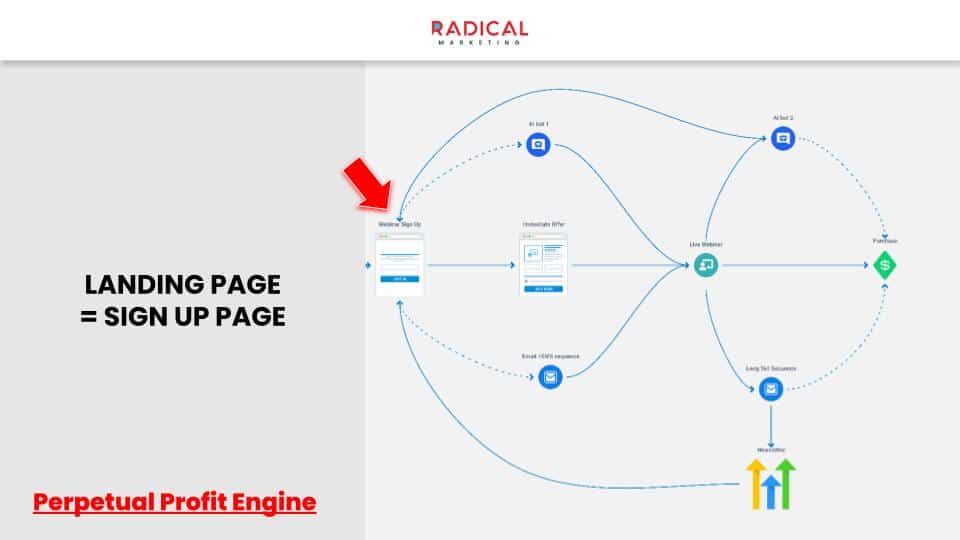
Your landing page has two jobs:
- Get a high percentage of the right people to sign up
- Filter out the wrong people
Most people only focus on the first job. They want high conversion rates at all costs. So they make promises that attract everyone and their grandmother.
Bad idea.
Because then you end up with a list full of tire-kickers who were never going to buy in the first place. And you waste time, energy, and money nurturing people who aren’t a fit.
A good landing page is specific. It speaks directly to your ideal client. It makes the wrong people think “this isn’t for me” and the right people think “finally, someone who gets it.”
Your headline, your offer, your entire message should be congruent with your ads. If your ad promises one thing and your landing page delivers another, you’ll see your conversion rate tank.
The lesson? Don’t just optimize for sign-ups. Optimize for the RIGHT sign-ups. A smaller list of qualified prospects beats a massive list of people who’ll never buy.
Protocol 3:
The Thank You Page Transformation
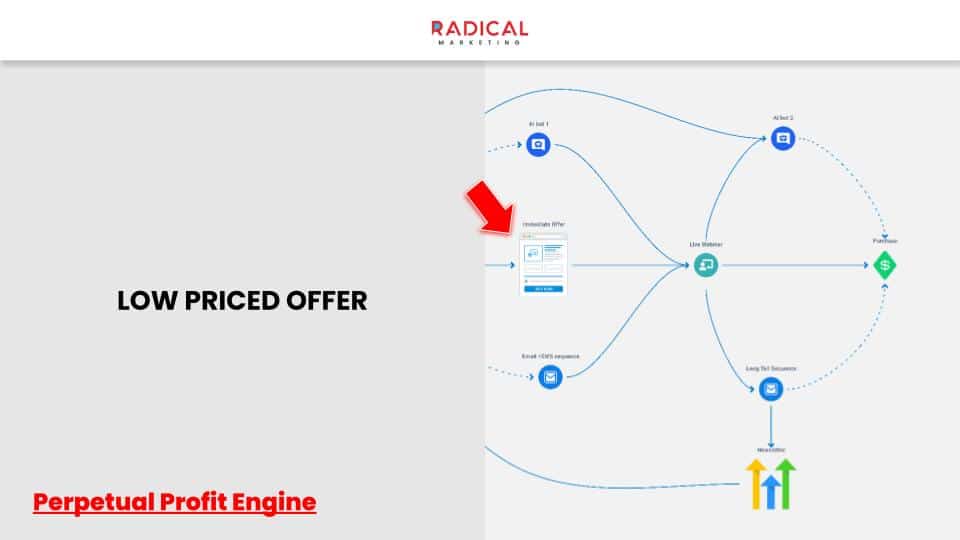
“The lawyer with the briefcase can steal more money than the man with the gun.”
Here’s where it gets interesting.
Most people treat the thank you page as an afterthought. “Thanks for signing up! See you at the event!”
Boring. And a massive missed opportunity.
What if instead, you made a small offer right there? Something low-ticket. Maybe $17, $27, $47.
Why does this matter?
Because when someone buys from you, even something small, the relationship fundamentally transforms. They go from “prospect” to “customer.” And customers are far more likely to buy from you again.
We’ve seen this play out time and time again. People who purchase even a small low-ticket offer on the thank you page have a significantly higher chance of buying the main offer later.
The goal here isn’t to make a fortune. It’s to transform the relationship.
The lesson? Don’t waste your thank you page. Use it to turn cold prospects into paying customers before they even attend your event.
Protocol 4:
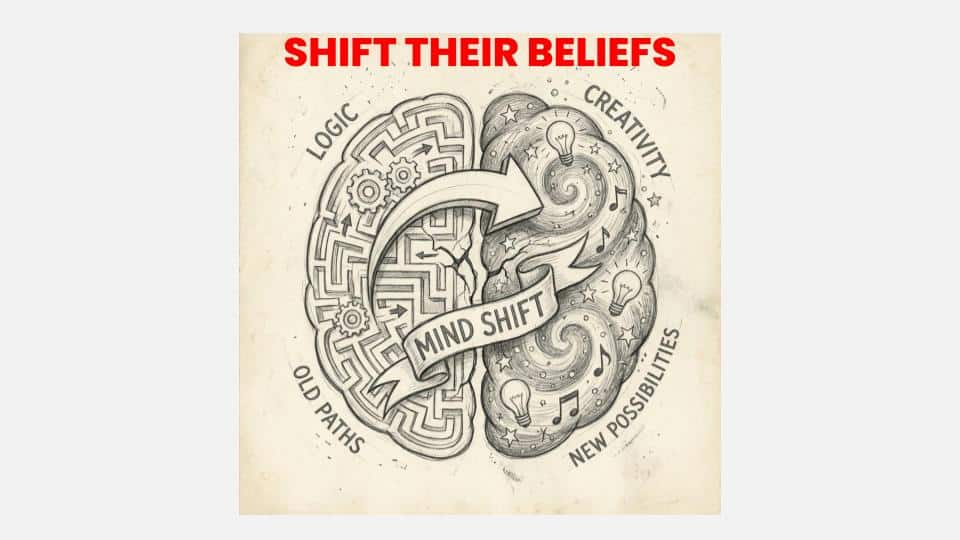
The Belief Shift (Not The Information Dump)
This is where most people go wrong with their events.
They think the goal is to teach. To demonstrate expertise. To pack in as much valuable information as possible.
So they create 90-minute presentations stuffed with tactics, strategies, frameworks, and enough content to fill a university course.
And then they wonder why nobody buys.
Here’s the truth:
The goal of your event isn’t to teach people how to do something. It’s to create a belief shift.
Think about it. If your prospects don’t believe they can achieve the result, why would they invest in your offer?
If they don’t believe your method is different from everything else they’ve tried, why would they trust you?
If they don’t believe NOW is the time to act, why would they buy today instead of “thinking about it”?
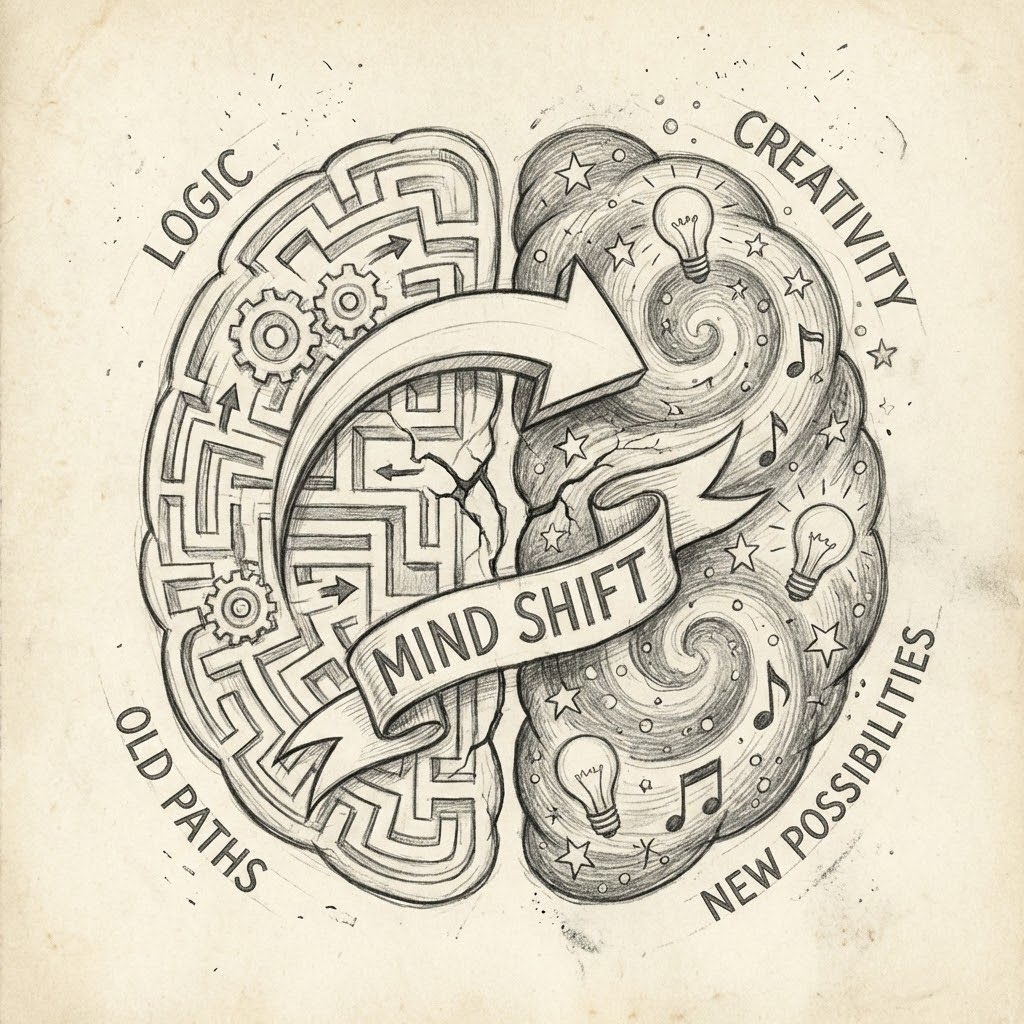
Your job is to shift their beliefs. To open their minds to a new possibility. To help them see something they couldn’t see before.
The pros understand this. The amateurs just keep teaching more and wondering why their conversion rates are garbage.
The lesson?
Stop trying to prove how smart you are. Start focusing on what beliefs need to shift for your prospect to say yes.
Protocol 5:
Pre-Event Emails That Actually Get Opened
Between signup and the event, there’s a gap.
And in that gap, life happens. People forget. They get busy. They lose interest. Something shiny distracts them.
Show-up rates have been declining across the board. People have more distractions than ever. If you’re not actively working to get them to show up, they won’t.
This is where your pre-event email sequence comes in.
These aren’t just “reminder” emails. They’re designed to:
- Build anticipation for what they’ll learn
- Establish your credibility and authority
- Address objections before they even show up
- Create genuine excitement about the event
Done right, these emails warm people up so much that by the time they attend, they’re already halfway to buying.
The lesson?
The sale doesn’t start at your event. It starts the moment they sign up. Use the gap wisely.
Protocol 6:
AI Chatbots Before The Event
Here’s something we’ve been implementing lately that’s been working incredibly well.
AI chatbots that interact with registrants before the event.
These bots can:
- Answer common questions
- Remind people about the event
- Build rapport and engagement
- Qualify leads further
The result? Higher show-up rates. More engaged attendees. Better conversion.
And the best part? It scales. You can have personalized conversations with hundreds or thousands of people without hiring an army of staff.
The lesson? Leverage technology to create more touchpoints. The more engaged someone is before the event, the more likely they are to show up and buy.
Protocol 7: AI Chatbots After The Event
The event ends. Not everyone buys.
That’s normal. In fact, most people won’t buy immediately.
But many of them are fence-sitters. They’re interested. They’re just not quite ready to pull the trigger.
This is where a post-event AI chatbot can work magic.
It can:
- Answer lingering questions
- Address specific objections
- Provide social proof
- Create urgency
- Guide them toward making a decision
Think of it as a tireless sales assistant that works 24/7, having personalized conversations with every prospect who didn’t buy.
The lesson? The sale isn’t over when the event ends. It’s just entering a new phase. Have systems in place to continue the conversation.
Protocol 8: Re-Engaging No-Shows
Some people will sign up and never show.
Life happens. Meetings run late. Kids get sick. They simply forget.
Most businesses just let these people go. Write them off as “not interested.”
Big mistake.
These people raised their hand. They were interested enough to sign up. They’re still potential customers.
An AI bot designed specifically for no-shows can:
- Let them know what they missed
- Offer a replay or alternative
- Sign them up for the next event
- Keep them engaged until they’re ready
Don’t give up on people just because they missed one event. Build systems to bring them back.
The lesson? No-shows aren’t lost causes. They’re opportunities waiting to be recovered.
Protocol 9: The Post-Event Sequence
After the event, most people still won’t buy.
That’s just reality. Not everyone is ready. Some need more time. Some need more information. Some need to see more proof.
This is why you need a post-event sequence that runs for 7-14 days after the event.
During this period, you:
- Share additional content and value
- Provide more testimonials and case studies
- Address common objections
- Create urgency as deadlines approach
- Invite them to the next event if they’re still not ready
This is where a lot of the “long tail” revenue comes from. People who didn’t buy on the day but converted during the follow-up sequence.
The lesson? The money isn’t just in the event. It’s in the follow-up. Build a robust post-event sequence and watch your overall conversions climb.
Protocol 10: The Newsletter (Your Golden Goose)
Here’s the protocol that most people skip entirely.
You’ve spent all this money getting people into your world. You’ve run ads. You’ve nurtured them. You’ve done events.
And then… you just leave them alone?
That’s like raising a golden goose and then forgetting to collect the eggs.
Your email list is an asset. And like any asset, it needs to be maintained and fed.
A simple weekly newsletter can:
- Keep you top of mind
- Continue building trust and authority
- Warm people up for future offers
- Drive sales for new products and services
- Invite people to new events
The money is in the list. But only if you actually nurture it.
The lesson? Don’t just build a list. Feed it. Nurture it. Turn it into an asset that perpetually grows your business over time.
How These 10 Protocols Compound
Here’s what makes this powerful.
Each protocol, on its own, might only add 10% improvement to your results.
But 10% compounded 10 times?
That’s not a 100% improvement. That’s a 159% improvement.
That’s the difference between a business that barely breaks even and a business that scales profitably.
One client of ours, Yasir Khan, is a speaking coach and influencer. We helped him launch his first series of events using this system.
His results:
- 5.44x ROAS (every dollar in, $5.44 back out)
- 6,000+ leads generated
- 25% show-up rate
Not bad for a first go.
That’s the power of having a system where everything compounds.
Ready To Build Your Own
Perpetual Profit Engine?
Look, I just gave you the blueprint.
You know the 10 protocols. You understand how they work together. You’ve seen proof that it actually delivers results.
Now you have a choice.
You can take this information and build it yourself. Piece it together over the next few months. Test and iterate. Figure out what works.
Or you can get help from people who’ve already built these systems hundreds of times.
If you’re a coach, course creator, or service provider doing $300K+ and you want to scale without the guesswork…
We should talk.
Book a call to see if we’re a good fit
No pressure. No hard sell. Just a conversation to see if we can help.
Either way, stop gambling with your marketing.
Build a system.
This post is Part 1 of the Perpetual Profit Engine series. Stay tuned for Part 2, where I’ll break down the traffic and landing page protocols in detail.
This podcast is hosted by Terence Tam, author of Lead Surge: 8 Radically Effective Marketing Funnels for Coaches and Experts. He is also the Founder of Radical Marketing, a digital marketing agency that partners with high-ticket coaches to scale their businesses with Webinars – by using a proprietary blend of story ads and battled-tested sales funnels to achieve better returns on ad dollars.